
Quick answer
Choose what the team needs to leave knowing or agreeing. Give that question a focused working session, pair it with an approachable activity and a meal, then close with named next steps. Confirm the group’s needs and the practical arrangements before choosing the final setting.
A January gathering can give a team a deliberate start: welcome new colleagues, put a priority into plain language and make time for people who usually meet through a screen.
For the person planning it, the useful first choice is the purpose. A sales team preparing for a new quarter needs a different conversation from a department welcoming new people. Both can enjoy a shared activity; the working part should reflect the actual brief.
Give the day one useful question
Before choosing a venue, finish this sentence: “By the end of the day, we need to agree…”
A cross-functional team might need a clearer handoff between sales and delivery. A leadership group might need to choose which of three projects gets attention first. A growing department might need to explain who owns which decisions.
Send the question in advance with a short summary of the relevant facts. Ask participants to bring one example or obstacle. Agree who can make the decision, what is open for discussion and what has already been decided.
This preparation gives the facilitator something concrete to work with. It also helps avoid inviting people to “shape the plan” when the plan is already fixed.
Make space for work and enjoyment
An illustrative kickoff could begin with coffee and introductions, move into a focused discussion, pause for lunch, then shift to an activity before a short close.
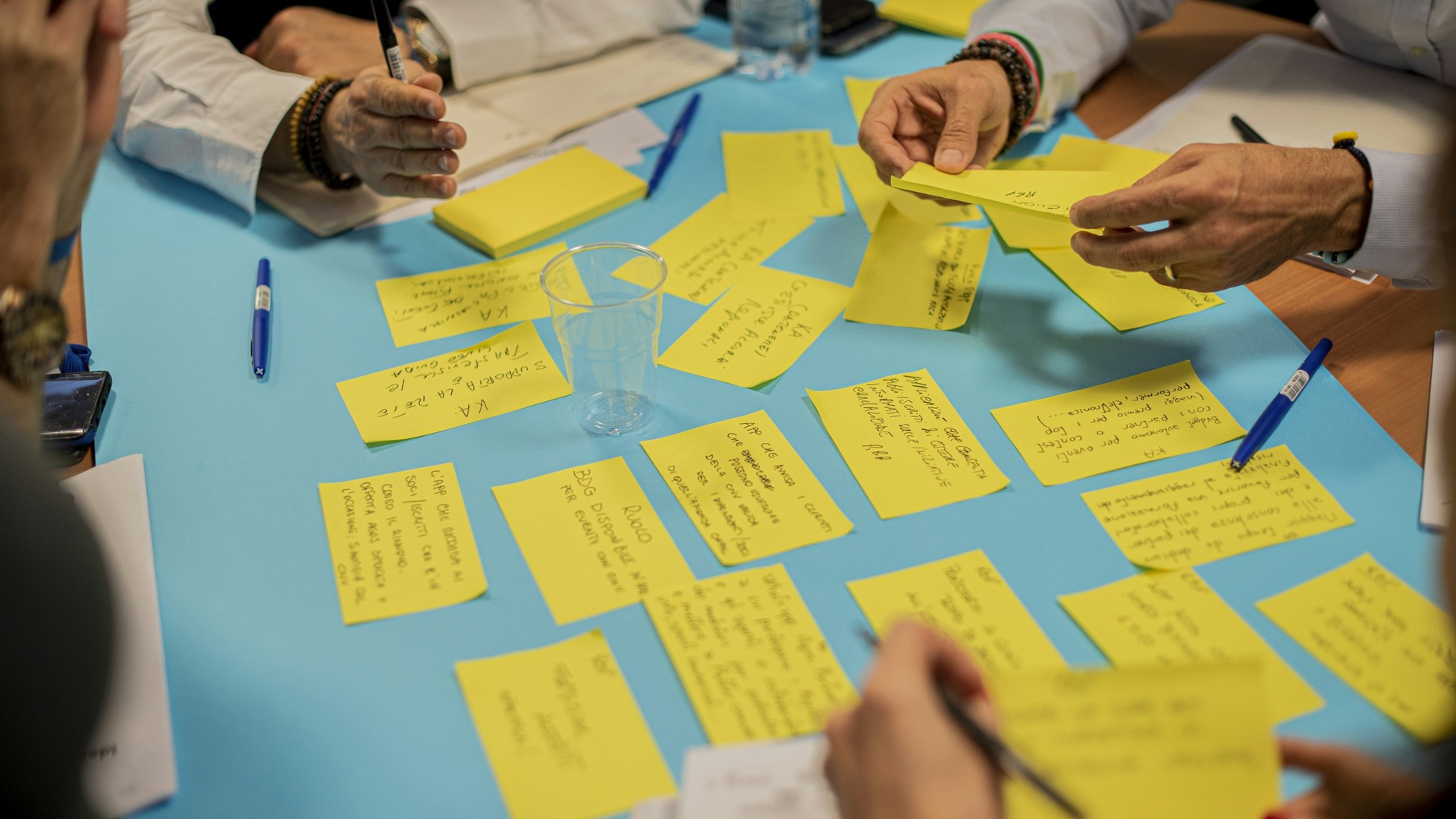
For example, a team could map a recurring client handoff, identify where information gets lost and agree one change to try. After lunch, colleagues could join an introductory pickleball session with coaching and short rotations. The close would confirm the work decision, its owner and when the team will review it.
The sport gives people a shared experience and a chance to interact in a different setting. It does not need to become a test of leadership or a diagnosis of how someone works. Any reflection should be voluntary, specific and relevant.
Allow room for arrivals, breaks, changing clothes and moving between spaces. If the group has only half a day, reduce the number of elements.
Choose an activity the group can join
A sports team day could suit colleagues who want an active afternoon, with introductory instruction and an agreed alternative for anyone who does not play.
A cultural visit could provide a quieter shared experience. Our museum offsite guide explores how a visit can sit alongside a separate working conversation.
For a coastal direction, consider supervised environmental learning or a confirmed cleanup activity. Let the relevant organizer define the site, tasks, access and operating conditions.
Choose one direction that fits the group. These are possible components of a tailored brief; venues, specialist providers and availability need confirmation.
Let the setting support the agenda
A hotel meeting room with a nearby activity may keep the day straightforward. A company space can also work if it offers a genuine break from interruptions. An outdoor setting needs a practical alternative for the actual group and program.
Assess the working session as carefully as the experience. Can everyone hear? Can participants read and contribute to the materials? Is there a private space for a sensitive conversation?
The W3C Web Accessibility Initiative recommends asking about access requirements, providing accessible materials and allowing for breaks and movement between rooms. Use those considerations early, while choices are still flexible.
For a sports session, agree coaching, equipment, participation options and operating responsibilities with the provider. For everyone, check arrival routes, seating, restrooms, food requirements and the transitions between activities.
If some colleagues will join remotely, give their working session a clear start and finish, accessible materials and someone responsible for bringing their contributions into the room.
Leave with something people can use
Reserve the close for the decisions that matter. Record what was agreed, who owns the next action, when it is due and which questions remain open.
For the client-handoff example, the output might be a revised checklist, one person responsible for testing it and a review date. That is more useful than a broad promise to communicate better.
Let people know who will circulate the notes. Keep private personnel or client information out of public event photographs and recap posts. A successful gathering can be enjoyable in its own right; any business improvement should be assessed afterward.
Bring a clear starting brief
JETFUEL Team Experiences provides starting points for shared activities and facilitated discussions, with the final scope agreed for the group.
For a kickoff inquiry, share your preferred dates, approximate headcount, budget range, working question and the mix of activity and hospitality you want. Include access needs, travel plans and anything already arranged.
Bring that starting point to the JETFUEL Project Desk. A defined brief makes it easier to build a day that fits both the people and the work ahead.