
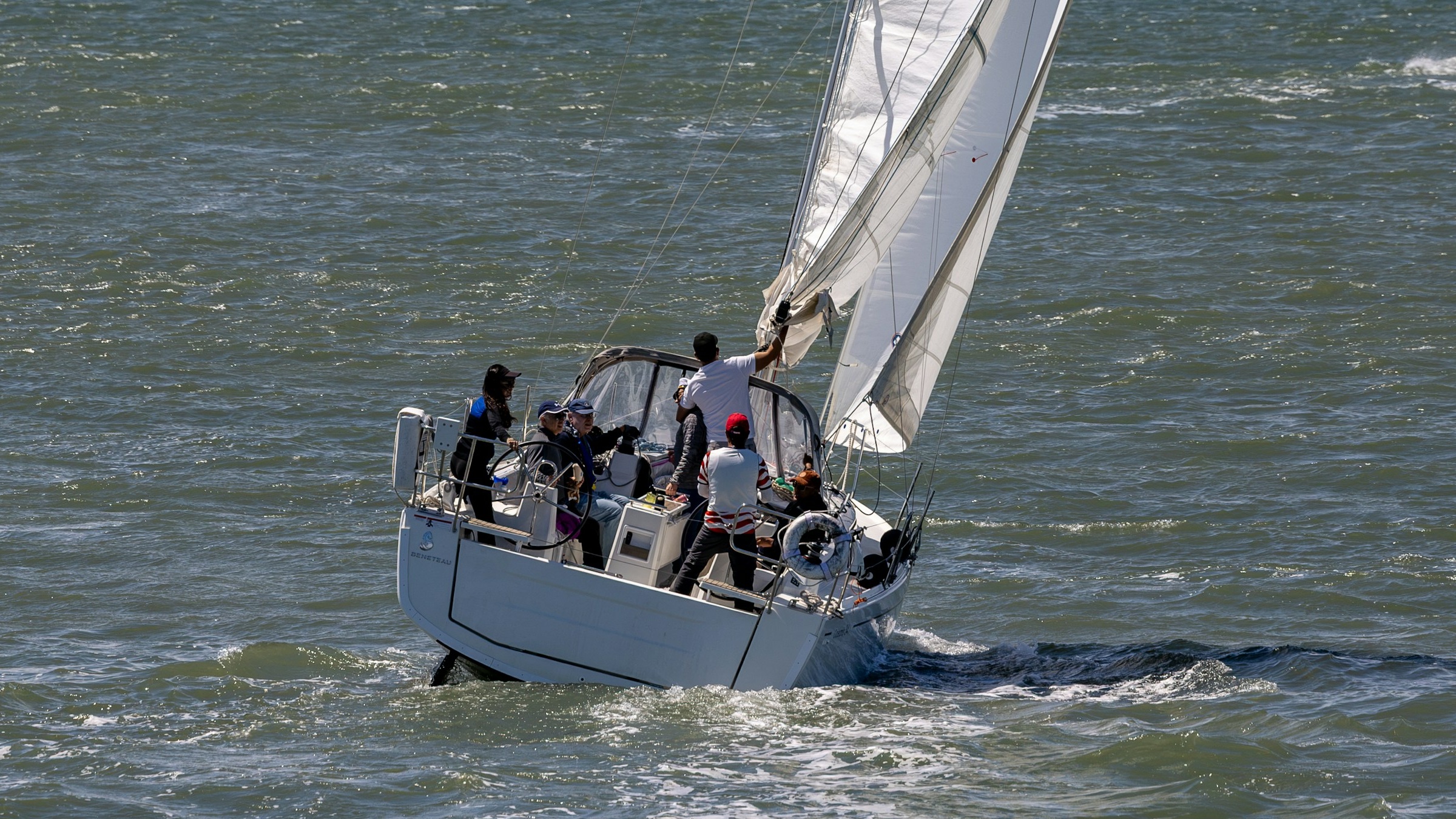
Quick answer
Choose how actively your group wants to participate before choosing the boat. A guided sailing session, a friendly regatta and a relaxed hosted sail need different preparation. Confirm the crew’s role, participation options, boarding arrangements and weather decisions, then protect time for everyone to come together afterward.
A sailing day gives colleagues something tangible to try together: listening to a skipper’s instructions, taking a supervised turn at the helm or seeing how a change to a sail affects the boat. It can be an appealing part of a San Diego company gathering, particularly when the group wants shared activity and a change of setting.
The first decision is the experience people want aboard. That choice should shape the vessel, crew and schedule.
Choose the level of participation
Learn together. Ask for a guided introduction with opportunities to try appropriate tasks under the crew’s direction. This can suit colleagues who are curious about sailing but have different levels of confidence. Find out what guests can actually do and how turns will work.
Add friendly competition. A professionally run regatta can give the activity a clear challenge. Ask how newcomers are briefed, how participation is shared and how the event changes if conditions do not suit racing. Winning should not require the most experienced guest to do everything.
Keep it social. For appreciation or informal time with colleagues, a hosted sail may be the better brief. Choose it for the chance to enjoy being together, with optional involvement where the operator allows.
These distinctions exist in the local market. Sail San Diego describes both leisure outings and team regattas, including guest roles at the helm and sails. It is one example to investigate; the specific provider, vessel and arrangements would need to be confirmed for your event.
Build a complete team day
An illustrative program could begin with a welcome ashore, followed by the crew’s briefing and a guided sail. Guests take part in agreed activities, with opportunities to observe or rest. The group then returns for refreshments and an unhurried conversation.
If several boats are needed, plan the group assignments around the purpose of the day. Mixing departments may help colleagues spend time with people they rarely see; keeping a working team together may better suit a particular discussion. Confirm how each boat receives a consistent introduction and level of support.
Keep the whole-group welcome and close ashore. People on different vessels will have different moments to share, and a gathering afterward gives them a chance to reconnect.
For a hotel-based offsite, include the journey to the dock, boarding time and return arrangements in the schedule. Ask the operator what return window can be planned around before committing a tightly timed dinner or presentation.
Give any discussion a useful purpose
For a team focused on handovers, a short conversation afterward could explore one question: what helped someone take over an unfamiliar task? Invite concrete observations, then ask what information would make an everyday work handover clearer.
Keep the discussion tied to the team’s actual work. If the objective is appreciation, a relaxed meal and conversation may be enough. A deeper leadership workshop needs its own preparation, facilitator and suitable space ashore.
Check who can comfortably take part
Ask about access and participation needs before selecting a vessel. Review the actual boarding route, steps, seating, restrooms, shelter and movement around the boat with the operator. A guest who wants to watch should still feel included.
Resolve motion concerns and an appropriate alternative for anyone unable or unwilling to board. If the format excludes a substantial part of the group, choose a different shared activity.
The U.S. Coast Guard’s life-jacket guidance emphasizes equipment suited to the wearer and activity. Have the operator explain the briefing, equipment and procedures for the selected vessel. Keep vessel operation and safety decisions with the qualified crew; a company host’s role is to coordinate guests and the wider program.
Agree who makes weather decisions, when guests will be notified and what happens to transport, catering and any shore program if the sail changes. Confirm cancellation and rescheduling terms before sending invitations.
Make the brief specific
Bring JETFUEL your objective, approximate group size, preferred dates, working budget and the level of activity people would enjoy. Include access needs, hotel arrangements and any provider already engaged.
Sailing is a possible direction to explore within an individually scoped JETFUEL Team Experience. A proposal should define provider coordination, guest communications, transport, hospitality and any facilitation, with responsibilities, fees and third-party costs stated clearly.
If ocean conservation is part of the brief, define the contribution separately. A sailing outing alone does not establish a conservation outcome; our ocean team-day guide explores that planning choice.
Share your starting point with the JETFUEL Project Desk. Build the day around what your people would enjoy doing together.