
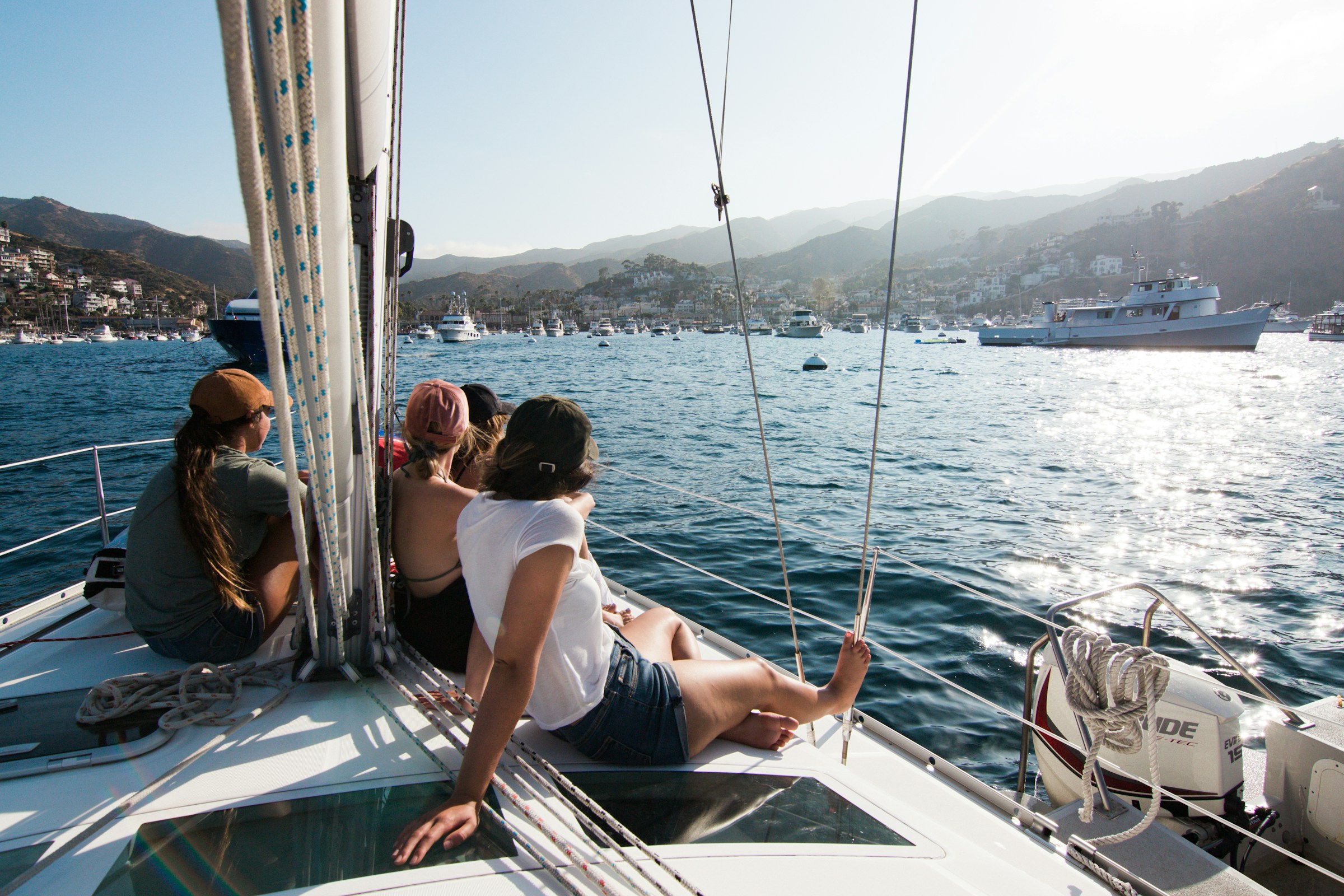
A team day on the water can start with something straightforward: colleagues stepping aboard, finding a comfortable place to sit and seeing San Diego from a different perspective.
Add a knowledgeable marine educator and the outing can become more than a sightseeing cruise. Participants could observe wildlife, explore how the shoreline connects to the bay and compare what they notice over a shared meal.
The first planning decision is what the company wants people to take from the experience. Appreciation, cross-team connection and environmental learning suggest different programs. A conservation contribution adds another requirement: a specific action or beneficiary that can be confirmed.
Give participants something to explore
For a mixed-interest group, keep the activities approachable. Nobody should need sailing experience or a marine-biology background to enjoy the day.
An illustrative program could include:
- A dockside welcome: introductions, the crew’s briefing and an explanation of the day’s theme.
- Guided observation: looking for birds or other marine life from appropriate viewing areas, with binoculars where practical.
- A shared investigation: small groups following a question, such as how activity on land affects the water around them.
- Time together afterward: refreshments or a separately arranged waterfront meal, with room for conversation.
The local environmental connection is tangible. The Port of San Diego explains that rain can carry outdoor debris through storm drains into the bay. A guide could use that relationship to connect the shoreline people see with everyday decisions about waste. Port of San Diego
The activities should support the outing without filling every minute. Leave time to look, ask questions and enjoy being there.
Define the conservation component
Environmental learning and conservation action can complement each other, but they should be described separately.
If guests hear from a marine educator and observe the coast, call it an educational experience. If the company also wants to support conservation, establish what that support involves before making it part of the invitation.
That might mean an agreed contribution to a named organization or participation in a supervised activity the organization actually needs. Confirm the recipient, purpose and arrangements directly. Do not promise restoration outcomes or quantify environmental benefits without evidence.
Likewise, recording wildlife observations does not automatically make the outing a research project. Any citizen-science element should use an established program’s methods and submission process.
For a group that primarily wants hands-on volunteering, a beach-cleanup team day may be the more direct starting point. A boat-based experience offers a different emphasis: observation, learning and time together on the water.
Choose the vessel around the guests
Before comparing boats, establish what participants need to do comfortably.
Can everyone hear the educator? Is there suitable seating and shelter? Can people move between the viewing area and restrooms? Does the boarding arrangement work for the guests attending?
Ask about access requirements privately and review the actual dock, boarding route and vessel with the operator. A general description such as “accessible” is not a substitute for checking the relevant features.
The brief should also address motion sensitivity, sun exposure, time underway and an alternative for anyone who cannot or prefers not to board. If a significant part of the group would be excluded, reconsider the format rather than treating those guests as an afterthought.
For appreciation or cross-functional connection, a relatively simple hosted outing may be enough. For a leadership offsite, keep any substantial workshop in a setting where everyone can hear, participate and concentrate.
Connect the discussion to a real decision
A conservation theme can provide useful material for a team conversation without forcing a workplace analogy onto every wildlife sighting.
After learning how litter reaches the bay, for example, colleagues could examine one part of their own event planning: which disposable items are necessary, what alternatives are practical and who would own a change.
That discussion follows directly from the subject of the outing. It also gives the group a decision to consider after returning to work.
A staff appreciation day may need no facilitated discussion at all. The value can be a well-hosted experience and uninterrupted time with colleagues. Choose the level of structure deliberately.
Let the crew and conditions shape the day
Agree in advance who makes weather and route decisions, what happens if the outing cannot proceed and how guests receive updates. Review emergency arrangements and the operator’s safety briefing.
The Coast Guard emphasizes that life jackets should fit the wearer and suit the activity. Ask the operator to explain the equipment and procedures appropriate to the selected vessel and passengers. U.S. Coast Guard
Wildlife observation also needs boundaries. NOAA’s West Coast guidance emphasizes distance and avoiding pursuit or disturbance. Build the program around responsible observation, with no promised sightings or close encounters. NOAA Fisheries
A bay outing and an offshore wildlife excursion should not be treated as interchangeable. Confirm the route, duration and operating requirements with the provider. No plan can guarantee conditions or eliminate risk.
Bring a clear brief
JETFUEL’s Team Experiences are individually scoped around the group, objective, setting and level of facilitation. A boat-based ocean-learning day is one direction to explore within that approach.
Before requesting a proposal, decide:
- Who is attending, and what participation needs should shape the format?
- Is the priority appreciation, team connection or environmental learning?
- Should the experience include a separately verified conservation contribution?
- How much time should be spent aboard versus together ashore?
- What alternative would still make the day worthwhile if conditions change?
Bring those answers, your approximate group size and preferred dates to the JETFUEL Project Desk.