
Quick answer
Design one complete guest turn before choosing the installation: a welcome, a simple challenge, a reset and an optional next step. Match the activity to the audience and venue, provide a meaningful alternative to playing, and measure participation separately from commercial conversations.
A guest approaches, watches someone make a pass and decides to try. A host explains the challenge, offers a practice attempt and keeps the next turn moving. Afterward, there is somewhere to pause, talk and discover why the brand brought people together.
That is a useful starting point for a soccer-led brand experience in San Diego. It could sit within a customer gathering, a partner event or a hotel-hosted corporate program, subject to the setting and permissions.
The idea is easy to picture. The work is in making every part of that short visit function.
Give the activity a clear purpose
Start with the people invited and the reason to host them. A sports brand might want guests to try an appropriate product through a supervised activity. A company welcoming business partners might simply want an enjoyable shared interest and time for introductions.
Both are credible briefs. They lead to different conversations afterward.
If the objective is product understanding, identify what the activity actually lets someone evaluate. Our approach to making the product the experience starts with that question. A successful pass does not demonstrate the quality of an unrelated service.
For client appreciation, let the soccer provide the occasion. Hospitality and thoughtful hosting can carry the relationship-building purpose without forcing a sales pitch into the game.
Build one complete guest turn
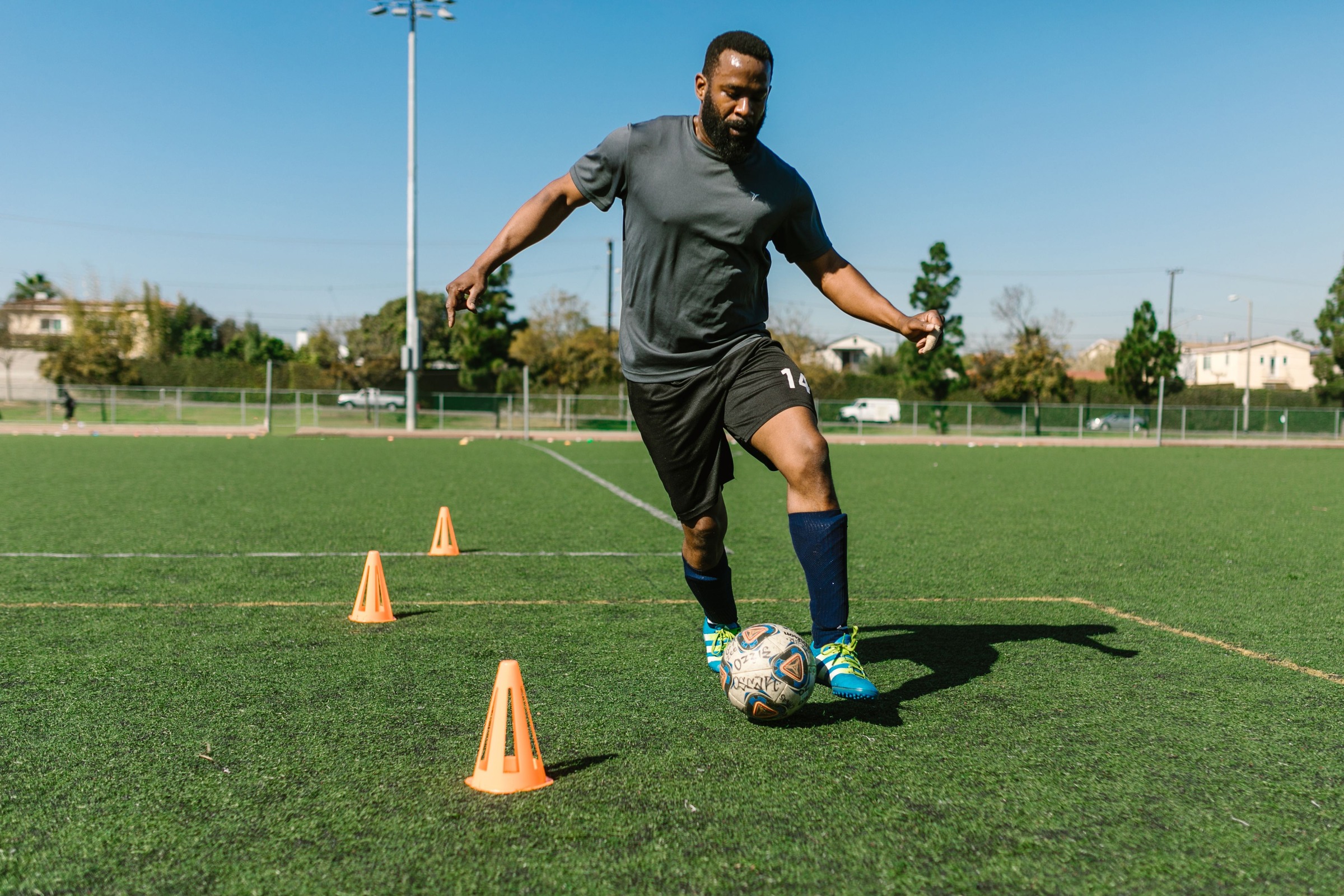
Consider an illustrative accuracy challenge for an adult guest group: controlled ground passes through cone gates, with the activity provider selecting suitable equipment and distances.
A turn could follow this sequence:
- Welcome: explain the activity in plain language and offer a choice of difficulty.
- Try: give the guest a practice pass before a short set of attempts.
- Finish: acknowledge the effort and result, whether or not the guest wants a score.
- Reset: retrieve the balls and clear the activity area before the next guest enters.
- Continue: invite an interested guest into a relevant demonstration, introduction or hospitality area.
Rehearse the whole sequence with someone who has not seen the brief. Time the explanation, practice, attempts, ball retrieval and changeover. Use that rehearsal to decide staffing and the number of activity positions.
The host running the challenge and the person having a detailed brand conversation may need separate roles. Otherwise, a useful discussion can stop the activity, or the queue can rush the discussion.
Make the invitation comfortable
A public leaderboard is one choice, not a requirement. Guests could try to improve their own result or take part without recording a score.
Ask about access needs and activity preferences before finalizing an invited event. Agree suitable adaptations with the provider and the guests who need them. Also offer a worthwhile route through the brand experience without kicking a ball: the same product explanation, a hosted introduction or a seated tactical discussion where it fits the theme.
Provide clear instructions and room to observe before deciding. Participation should remain optional.
An employee program built around mixing colleagues has a different brief. For that purpose, a sports day for the team gives more room for rotating partners, shared challenges and breaks.
Choose the setting around the activity
A venue review should cover the playing surface, footwear guidance, ball containment, separation from walkways, accessible routes and space for people waiting. Agree supervision, emergency arrangements and who can pause the activity.
For a hotel program, establish whether a suitable activity area is available and how it connects to the reception or meeting. A lawn shown in a venue photograph is not confirmation that ball activities or a branded installation are permitted.
For public parks, check the proposed use with the City of San Diego before committing. Commercial activity and equipment arrangements need specific review.
Outdoor plans also need a weather alternative. The National Weather Service advises reducing or rescheduling strenuous activity during extreme heat. Agree the decision process, guest communications and an alternative that still serves the event’s purpose.
Specify reusable equipment, a ball-retrieval plan and how refreshments and waste will be handled. Keep environmental claims proportionate to what the program actually does.
Decide what happens after the turn
Measure the activity against its purpose. Completed turns, repeat attempts, useful product questions and requested follow-up describe different outcomes.
For an appreciation event, the review might focus on whether guests participated comfortably and hosts made the intended introductions. For a marketing assignment, record the questions guests asked and the next steps they chose. A score or email address alone does not establish a qualified lead.
JETFUEL’s Events + Experiences work can be scoped around the activity concept, guest journey, supplier coordination, running order and onsite responsibilities. This soccer format is a direction to develop, with the venue, equipment, staffing and hospitality agreed in the proposal.
Bring the audience, event purpose, preferred dates, potential setting and budget range to the Project Desk. Include any arrangements already secured and the specific responsibility you want JETFUEL to take on.