
Quick answer
Choose what being outdoors adds to the occasion, then protect the parts guests came for: the activity, conversation, meal or recognition. Before confirming a venue, establish whether the indoor alternative can accommodate the actual program and what it takes to switch. A covered area and a weather safety plan serve different purposes.
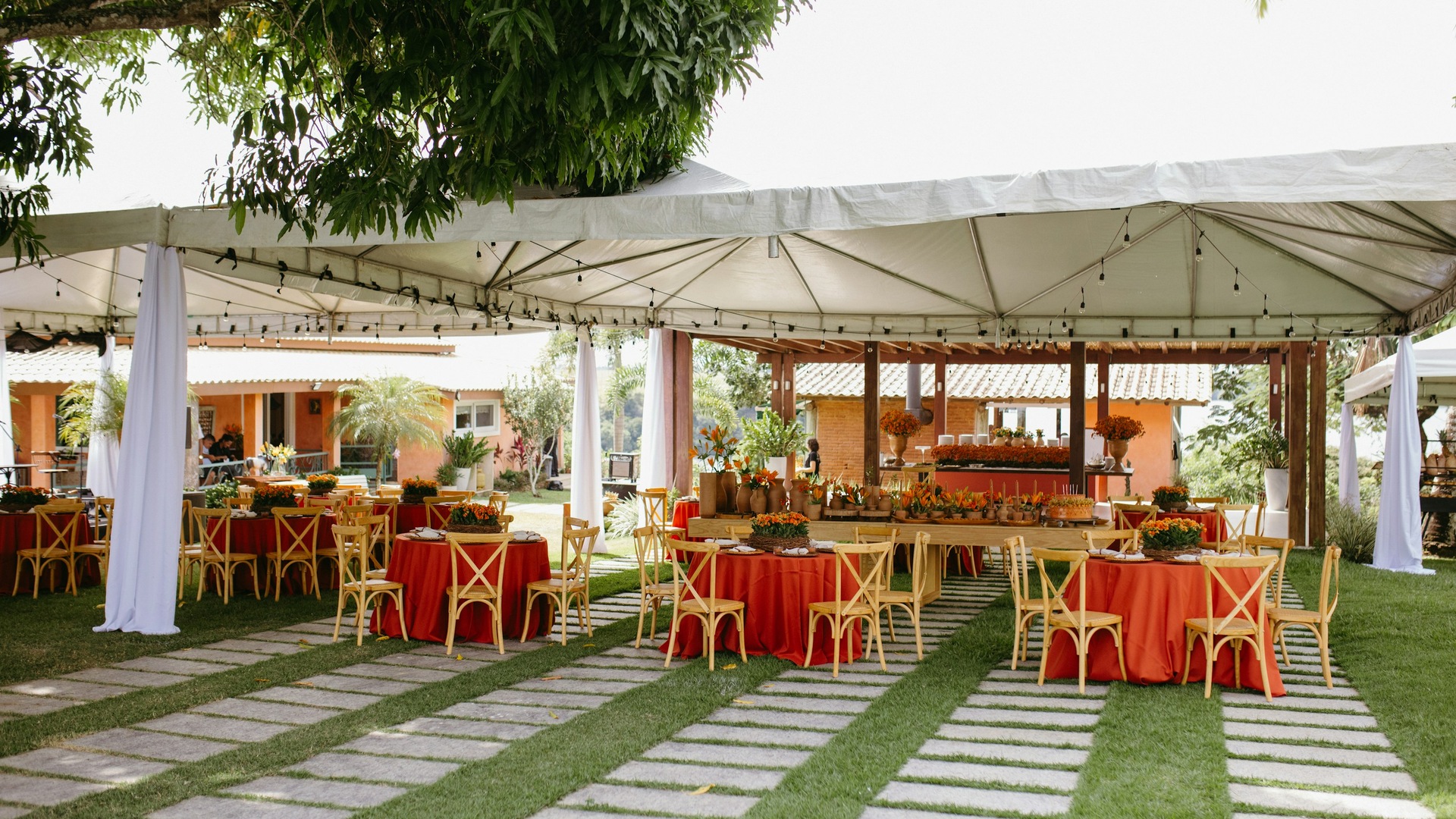
A terrace reception after a conference, a coached sports session followed by lunch, or an evening gathering in a garden can give colleagues and clients time together beyond the meeting room. The outdoor setting should contribute something specific: space to participate, a change of pace or a place where guests can settle into conversation.
For a year-end event with a short planning window, choose one main outdoor experience and build the rest of the occasion around it. A complicated program with several locations gives the team more arrangements to confirm and more decisions to revisit if conditions change.
Choose the experience first
For employees, an outdoor gathering might combine an approachable sports activity with a hosted meal. Agree how coaching, optional participation and time to socialize will work. People who prefer to watch should still have a comfortable place in the day.
For clients and partners, the outdoor element may be the setting itself. A terrace can support introductions, refreshments and conversation without an additional activity. Give relationship hosts time with their guests, and keep announcements brief enough to preserve that purpose.
For a brand activation, define what someone will actually do: try a product, join a demonstration or take part in a challenge. The layout needs room for people waiting, participating and leaving, as well as guests who simply want to look. A scenic backdrop does not replace that plan.
These are directions to develop around a brief, not fixed JETFUEL packages or confirmed venue arrangements.
Book the alternative as part of the event
A useful indoor alternative should preserve the reason for gathering. Moving a client reception inside may leave its main purpose intact. Replacing an active team session with rows of chairs changes the experience considerably.
For a proposed sports-and-lunch day, decide whether an indoor activity would be acceptable, whether the lunch can proceed independently, or whether the activity should move to another date. Make that choice before invitations promise a particular experience.
In San Diego, the Convention Center’s outdoor-space information describes terraces for catered receptions and notes that some mezzanine meeting rooms have direct terrace access. That illustrates a useful planning question: can the outdoor area and a suitable indoor room be secured together for your event? It does not establish availability or permission to move guests into any nearby room.
Ask the venue to show both layouts with your guest count, seating, service points and production needs. Confirm whether the indoor room is reserved for you, what additional charges apply, and the latest point at which suppliers can change their setup. Include the accessible route between spaces, rather than assessing each room in isolation.
Keep hospitality consistent
Walk through the experience from a guest’s perspective. Where will people sit? Can they hear a welcome? Where can someone take a quieter break? How will guests reach restrooms, refreshments and the next part of the program?
Review sun exposure, wind, temperature and lighting with the venue and suppliers for the proposed hours. Check the actual surface and route, including steps or uneven ground, and ask participants about access requirements while arrangements can still change.
Food service needs its own plan in each setting. Agree where preparation, service and clearing take place, which furniture can move, and who handles the change. Ask technical suppliers to assess the equipment and power arrangements for the approved layouts. Do not assume that an indoor setup can simply be carried outside.
The same applies to the budget. Separate the main event scope, the cost of holding an alternative space, and any additional work triggered by a change. That makes the decision clearer than a single contingency allowance with no defined use.
Assign the weather decision
A forecast check should lead to an agreed action, with someone responsible for communicating it. Establish the venue’s and activity operator’s requirements, who monitors conditions, who can pause or change the program, and how guests and suppliers receive instructions.
The National Weather Service recommends a lightning safety plan for organized outdoor activities, including when to stop, where people should go and who makes the decision. Its outdoor guidance also makes clear that tents and open-sided picnic shelters are not safe lightning shelter. A canopy selected for comfort is not a substitute for an appropriate emergency plan.
Agree practical decision points around supplier setup and guest travel, while retaining the ability to stop an activity when conditions require it. Any postponement or cancellation terms should be clear before the event is confirmed.
Bring a brief that can be scoped
Share possible dates, guest numbers, the purpose of the gathering and what you want people to do outdoors. Include any venue or suppliers already selected, access needs, the working budget and the person who can approve changes.
JETFUEL’s Events + Experiences service can help develop the concept or coordinate an agreed part of delivery. For an activity-led program, explore Team Experiences. The proposal should identify responsibilities and inclusions before work is confirmed.
Bring your dates, group and priorities to the Project Desk to explore a suitable outdoor gathering and a workable alternative.