
Quick answer
Start with what the awards recognize and who should be acknowledged. Build the schedule around complete award moments, including introductions, applause, photographs and transitions. Coordinate the stage program with dinner service, rehearse the cues and give the content and production decisions clear owners.
A company awards dinner brings colleagues together to celebrate work that deserves attention. People can hear the story behind an achievement, recognize the people involved and enjoy an evening beyond the usual meeting schedule.
The planning challenge is fitting those experiences together. A meaningful introduction needs a room that can hear it. Dinner needs a workable service schedule. Guests need time to talk without constantly being called back to the stage.
Start by deciding what the evening should recognize, then build the program and hospitality around those moments.
Decide what the recognition means
This format can suit an annual employee celebration, a sales-team gathering or a company milestone with a defined recognition program. It works best when the people attending understand why the achievements matter.
Agree the award categories, selection process and final decision-maker before developing the show. Ask each nominating team for one specific example of the contribution being recognized. That gives the host something more useful to say than a list of positive adjectives.
Include the colleagues whose work made the result possible. Decide when an individual award is appropriate and when the recognition belongs to a whole team.
Keep employee recognition distinct from a fundraising gala. Auctions, donation appeals and sponsor obligations introduce a different brief. A company dinner does not need those elements simply to feel like an occasion.
Build the schedule around complete award moments
An award takes longer than the announcement of a name.
Someone introduces the achievement. The recipient moves from their seat, receives the award, perhaps says a few words, poses for a photograph and returns. The next introduction needs a clear starting point.
Rehearse that full sequence with the actual room layout. Include applause and the distance between tables and the presentation area. If recipients may bring colleagues up with them, plan for that too.
Use the rehearsal to decide how many awards belong in one segment. Avoid adding categories until every available minute has been filled. Preserve space for a late arrival, a thoughtful acceptance or a transition that takes longer than expected.
Prepare a consistent, respectful alternative for anyone who prefers not to speak or cannot follow the proposed route. Recognition should not depend on being comfortable with a microphone.
Coordinate dinner and the stage program
Ask the catering lead and the person running the show to agree the sequence together.
The key decisions include when guests sit, when each course is served or cleared, when the room should be quiet and who authorizes the next transition. Write those cues into one shared running schedule.
For example, a possible evening could begin with a hosted welcome, move into dinner, pause for a focused awards segment once the agreed service activity is complete, then return to dessert and conversation. Another group may need recognition in two shorter segments. The menu, service approach and number of awards should determine the choice.
Do not assume that a late-running speech can be solved by asking the kitchen to wait indefinitely. Agree in advance what can move, what must stay fixed and who makes that decision.
Give guests a simple sense of the evening’s rhythm. A clear finish to the formal program lets them relax and enjoy the social time that follows.
Choose a room that supports the program
For a San Diego brief, assess the proposed layout before committing to its appearance in a venue photograph.
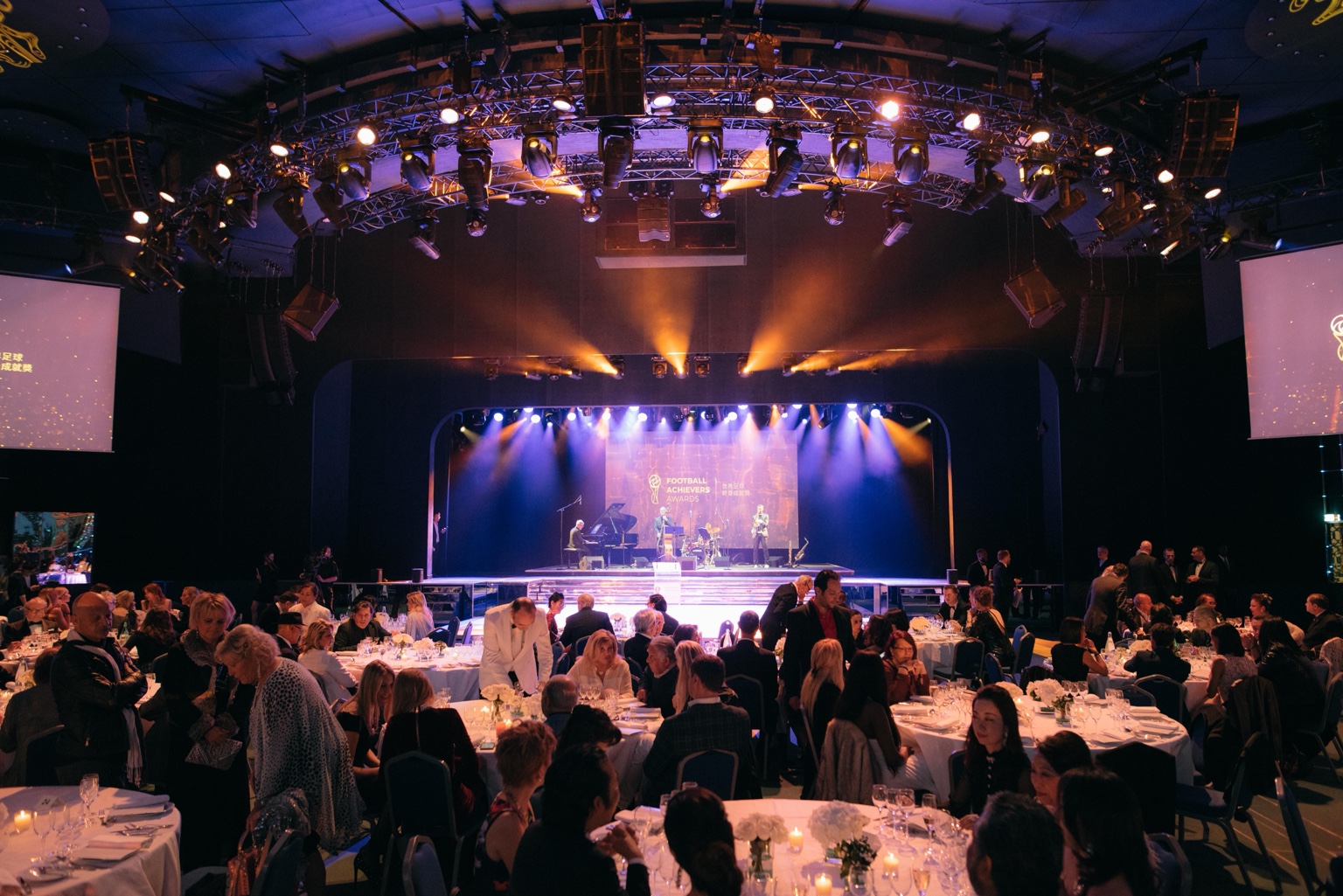
Where will the speaker stand? Can guests see from the outer tables? Will a screen block anyone’s view? Is there room for the service team to work without crossing the presentation route?
Check sound and projected content from guest positions, including the back of the room. Keep award slides concise and readable, and say the important information aloud.
The W3C Web Accessibility Initiative recommends planning accessible presentation areas, appropriate microphones and accommodations with participants and providers. Its guidance also highlights the distraction caused by catering setup during presentations.
Ask privately about access and dietary requirements early enough to arrange a response. Review arrival, seating, restrooms and the route to the presentation area with the venue. Agree emergency responsibilities and keep circulation routes clear.
If the welcome is outdoors, confirm an alternative that can accommodate the actual plan. Good weather should not be the only way the evening works.
Give the content an owner
Assign one client contact to approve names, pronunciations, titles, award wording and the order of presentation. Set a deadline that leaves time to check the slides, physical awards and host’s script against one another.
Brief presenters on the purpose and length of their contribution. Give the photographer the sequence and planned photo position. Decide who hands over each award and where it waits before being presented.
A rehearsal should cover the microphone, slides, lighting and movement together. It should also establish how the team handles a missing presenter, a recipient who is absent or a playback problem.
Afterward, share approved photographs and recognition messages in keeping with the company’s permissions and preferences. Evaluate whether the evening delivered the intended recognition and guest experience; attendance alone does not establish an improvement in retention or morale.
Agree what JETFUEL will handle
JETFUEL’s Events + Experiences approach includes gala-style company dinners and defined production workstreams.
A brief could cover venue sourcing, supplier and catering coordination, guest arrangements, the running schedule and on-site support. A company with a venue and internal planning team may instead need help coordinating the awards program and its handoffs. Responsibilities, resources and approvals are agreed during scoping.
For the wider venue and budget decisions, see our corporate-event planning guide.
Bring the purpose, approximate guest count, preferred dates, budget range and expected number of awards to the JETFUEL Project Desk, or email info@jetfuel.team. Include what is already arranged and where you need someone to take responsibility.